Leading Provider of Automatic Weighing Equipment
Leading Provider of Automatic Weighing Equipment
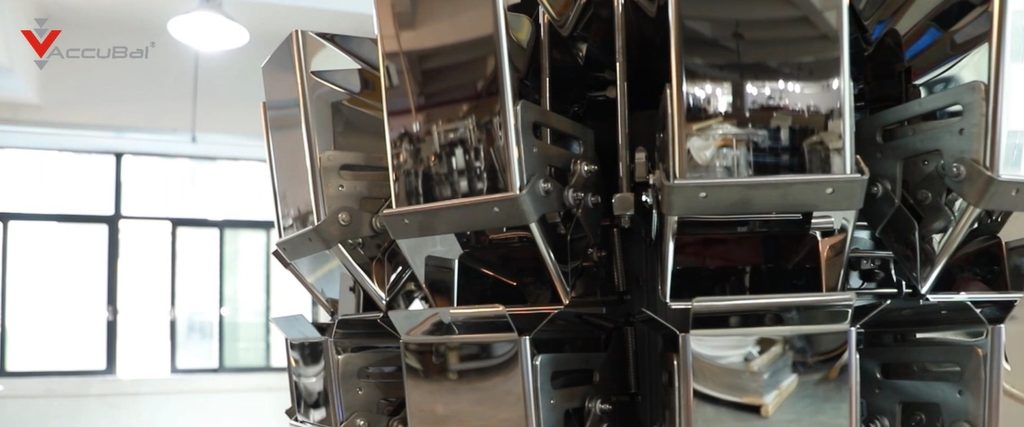
Food manufacturers across Southeast Asia handle a wide variety of products, from banana chips and local snacks to nuts, spices, noodles, and vegetables. These products differ in size, shape, weight, and flowability, which means they have very different requirements for automatic weighing.
Production needs also vary from one factory to another. Some manufacturers handle multiple products and pack sizes on the same production line, while others focus on a smaller product range with higher daily output. Many are also looking to upgrade from manual or semi-automatic weighing without replacing their entire packaging setup.
Choosing the right multihead weigher can help manufacturers improve weighing efficiency, maintain consistent pack weights, and manage production more effectively.
But how do you know which machine is suitable for your products and factory?
Before making a decision, consider three key questions:
The first step is to understand the product you need to weigh. Its size, shape, weight, fragility, and flowability all affect how it moves through the feeding system and weighing hoppers.
A machine that handles small, free-flowing granules well may not be suitable for large, fragile, or long products. Different applications may require different hopper designs, feeding methods, and machine configurations.
Here are some common food applications and the key factors to consider.
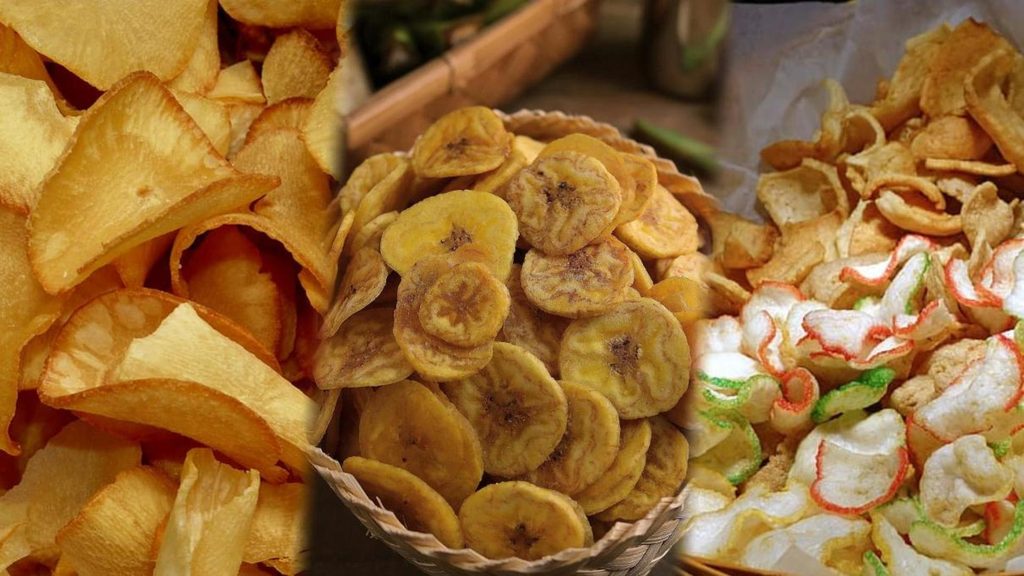
Banana chips, cassava chips, shrimp crackers, and other crispy snacks are widely produced and packaged across Southeast Asia.
However, these products often have irregular shapes and varying sizes. Some are lightweight and fragile, while others are bulky and may overlap during feeding. Excessive vibration or unsuitable hopper dimensions can affect product distribution and increase the risk of breakage.
When choosing a multihead weigher for these snacks, consider:
If your factory handles several types of snacks, check whether feeding settings can be adjusted easily when changing products.
Accubal's 10-head and 14-head multihead weighers can provide flexible options for weighing different types of crispy snacks, with configurations suited to various product sizes and target pack weights.
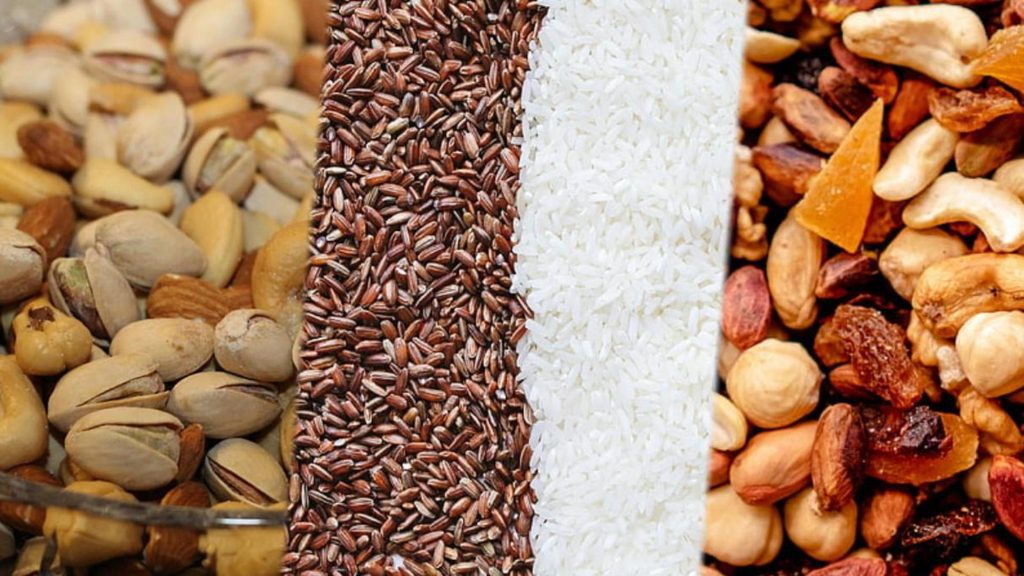
Peanuts, cashews, beans, rice, and mixed snack ingredients are also common weighing applications.
One challenge is that products can vary in size, shape, and density. For example, a mixed snack containing peanuts, small crackers, and larger crispy pieces may not flow evenly through the feeding system.
For these applications, pay attention to:
When weighing products with different particle sizes, testing the actual product mix is especially important. A configuration that works well for peanuts may not deliver the same results with a mixed snack containing larger or more fragile pieces.
Accubal's 10-head and 14-head multihead weighers offer different hopper configurations for nuts, rice, and mixed snacks. Testing product samples helps identify a suitable configuration for consistent weighing.

Whole spices, seeds, peppercorns, chilli flakes, and seasoning granules are used in many food processing and packaging applications across the region.
Although some of these ingredients are small, their feeding characteristics can vary. Small seeds may flow differently from larger whole spices, while lightweight dried ingredients may be affected by vibration and feeding speed.
Before selecting a multihead weigher, consider:
For fine powders, a dedicated powder weighing and filling solution may be more suitable than a standard multihead weigher. Choosing the right equipment depends on the ingredient's form and flow characteristics.
For small seeds and granular seasonings, Accubal's Mini Multihead Weigher offers an option for small-weight applications, while the Auger Filler is designed for powder filling.
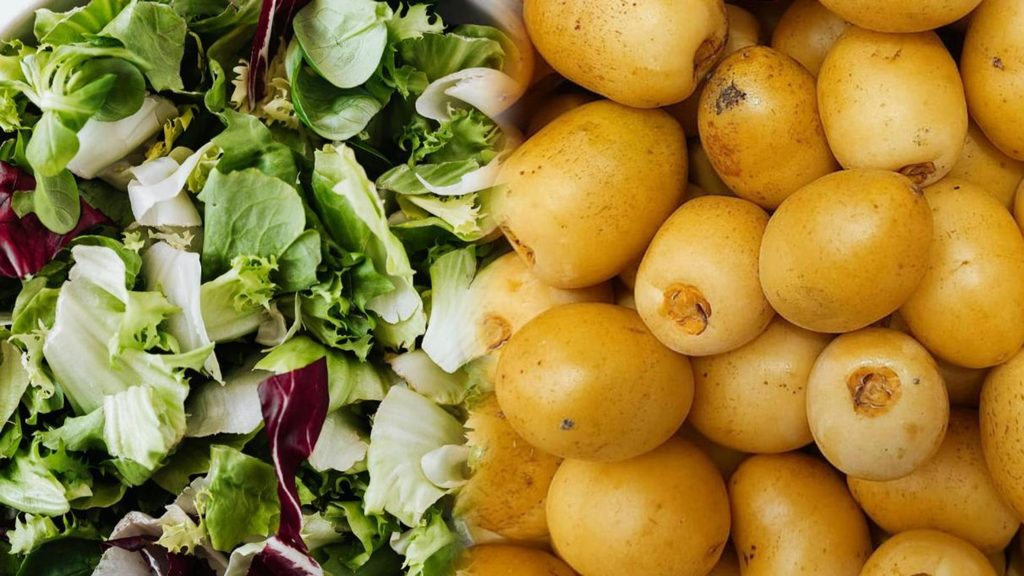
Fresh vegetables, leafy salads, and other bulky foods present different weighing challenges.
These products can take up a large amount of space even when their actual weight is relatively low. Standard hopper capacity may not provide enough room for efficient product handling.
For these applications, consider:
For bulky products requiring more hopper space, Accubal's Large Volume Multihead Weigher features 7.5L hoppers for bulky products and an anti-condensation design to support operation in humid production environments.
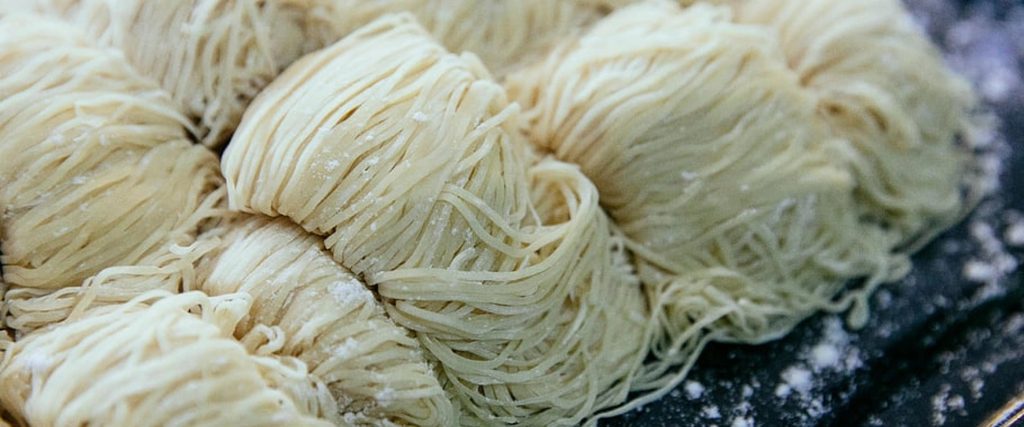
Rice vermicelli and fresh noodles can be difficult to handle during automatic weighing.
Their long shape and delicate texture may cause them to overlap, tangle, or break during feeding. Uneven distribution can also make consistent portioning more challenging.
When choosing a multihead weigher for these products, consider:
For long or delicate products, a dedicated feeding design is important to prevent tangling and product damage.
Accubal's Noodle Multihead Weigher features a specially designed linear feeding system to help reduce tangling and support smoother feeding and consistent portioning.
After identifying a suitable machine configuration, the next step is to determine how much production capacity your factory actually needs.
Food manufacturers may handle several product types and pack sizes, particularly when supplying supermarkets, local retailers, wholesalers, and food service businesses.
For example, a snack producer may need to prepare 50g or 100g retail packs alongside larger 200g or 500g packs. A rice or ingredient supplier may focus on 500g and 1kg packages.
These different requirements affect the target weight, packaging speed, and overall production arrangement.
Instead of choosing a machine based only on its maximum rated speed, calculate the output your factory needs.
For example, if a snack factory needs to produce 20,000 packs of 100g banana chips during an 8-hour working day, the average production requirement is approximately 42 packs per minute.
Required output = Daily production target ÷ Working hours ÷ 60
This calculation gives you a starting point. However, actual production also needs to account for:
Your selected machine should have enough capacity to meet the production target under normal working conditions, rather than operating continuously at its maximum rated speed.
It is also important to remember that actual output can vary depending on the product, target pack weight, feeding conditions, and packaging process.
A multihead weigher is usually part of a larger packaging process. Its output needs to match the capacity of the packaging machine and product feeding system.
For example, if the weigher supplies product faster than the packaging machine can pack it, the packaging stage becomes the bottleneck. On the other hand, a packaging machine with a much higher capacity may not operate efficiently if the weighing stage cannot supply enough product.
Before purchasing, check:
For manufacturers using flexible packaging or vertical form-fill-seal (VFFS) machines, it is especially important to confirm that the weighing and packaging equipment can work together smoothly.
If you already have a packaging machine, check whether a new multihead weigher can be integrated with your existing equipment. Upgrading the weighing stage first may be a practical option when the existing packaging system is still suitable for your production needs.
Some factories need to switch between products, recipes, or pack sizes depending on customer orders. Others may plan to increase production volume in the coming years.
In these cases, consider whether the machine can handle your product range and whether its configuration can accommodate future requirements.
For factories with multiple products, flexible feeding settings, convenient cleaning, and manageable product changeovers can make a difference to daily production efficiency.
The goal is to select a machine that meets your current production requirements while leaving reasonable room for growth, without paying for capacity you may not need.
For many food manufacturers, the challenge is not simply finding the cheapest machine. It is finding equipment that delivers stable performance and helps control operating costs over time.
When comparing multihead weighers, look beyond the initial purchase price. Consider how the machine will perform in daily production and whether it suits your factory's current level of automation.
Product giveaway occurs when the actual weight in a pack exceeds the target weight.
For products such as nuts, banana chips, and other packaged snacks, even a small amount of overfilling can add up across thousands of packs.
A multihead weigher uses weight measurements from multiple weighing hoppers to identify a combination of weights that meets or slightly exceeds the target weight. This helps control overfilling and maintain more consistent pack weights.
When evaluating a machine, check its weighing performance with your actual product and target pack weight. Do not rely only on the stated weighing tolerance, as results can also be affected by product characteristics, feeding conditions, and machine settings.
A practical product test can help you understand whether the machine can meet your weighing requirements under actual operating conditions.
Not every factory needs to replace its entire production line at once.
For manufacturers that already have a suitable packaging machine, upgrading the weighing stage may be a practical way to improve production efficiency. However, compatibility between the existing packaging equipment and the new weigher should be checked first.
For factories moving from manual or semi-automatic weighing to automated production, starting with a standalone multihead weigher may be more manageable than investing in a complete integrated line immediately.
The right level of automation depends on your production volume, labor requirements, product range, existing equipment, and budget.
Reliable production also depends on how easily the machine can be operated and maintained.
If your factory handles several snack varieties, grains, or seasoning ingredients, cleaning and product changeovers can take up valuable production time.
Before purchasing, ask about:
It is also worth checking how easily operators can adjust machine settings when changing products or pack weights.
A machine that is easier to operate and maintain can help reduce unnecessary downtime and support more stable daily production.
Before requesting a quotation, prepare the following information. This will help the supplier understand your application and recommend a more suitable configuration.
| Information to prepare | What to consider |
| Product type | Banana chips, cassava chips, nuts, rice, spices, noodles, fresh vegetables, or other products |
| Product characteristics | Fragile, sticky, bulky, long, irregular, or mixed in size |
| Target pack weight | 50g, 100g, 200g, 500g, 1kg, or other requirements |
| Required production output | Packs per minute or daily production target |
| Packaging equipment | Existing packaging machine or a new complete packaging line |
| Product range | One product or multiple products requiring changeovers |
| Production environment | Ambient, cold, humid, or other working conditions |
| Investment plan | Current budget and expected future production needs |
Before requesting a quotation, prepare the following information. This will help the supplier understand your application and recommend a more suitable configuration.
If possible, provide product samples or clear product photos for evaluation. Testing with actual products can help confirm feeding performance, hopper suitability, and the most appropriate machine configuration.
Yes, in many cases. Feeding settings and weighing parameters can be adjusted for different products and target weights. However, product characteristics and machine configuration should be considered. Testing with actual products is recommended to confirm suitability.
In many cases, yes. A multihead weigher can be integrated with a suitable existing packaging machine, including vertical form-fill-seal (VFFS) systems. Before upgrading, check the machine interface, discharge arrangement, available space, and production speed to ensure compatibility.
Prepare your product type, product samples or photos, target pack weight, required production speed, and packaging machine details. This information helps the supplier evaluate your application and recommend a suitable machine configuration.
Whether you are upgrading from manual weighing, expanding your production capacity, or handling a wider range of food products, the best machine is not necessarily the one with the most weighing heads or the highest rated speed. It is the one that matches your actual application and supports reliable production at a reasonable investment.
Choosing the right machine starts with understanding your product and production requirements.
Contact Accubal with your product type, target pack weight, and required production output. Our team can help you explore a practical and cost-effective weighing solution for your factory.